Winter Pots With a Job to Do: Structure, Scent and a Spring Payoff
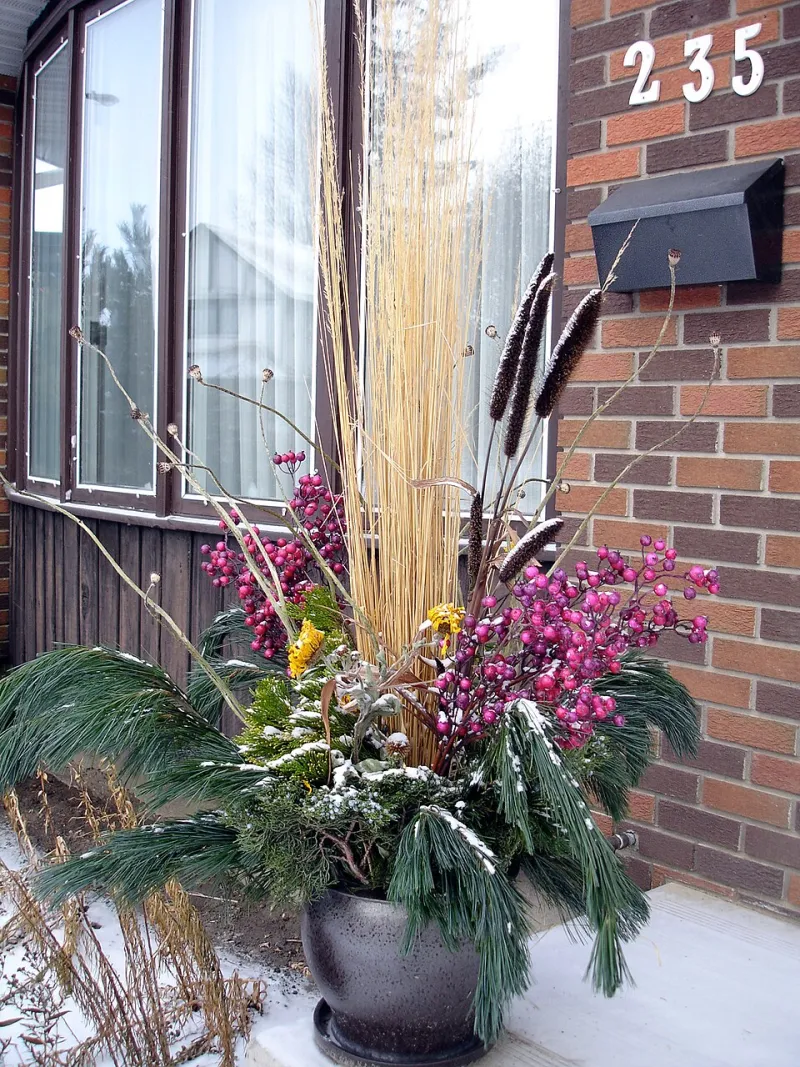
Photo: daryl_mitchell from Saskatoon, Saskatchewan, Canada, CC BY-SA 2.0, via Wikimedia Commons
Winter is not the enemy of a container garden. Soggy compost, a gale funnelled between fences and a plant that was already sulking in October are the real problems. Get those three sorted and a pot can carry the whole garden through the grey months. The aim here is not a Chelsea-style winter display. It is a scheme that looks deliberate from the kitchen window, survives a British frost and gives you something to look forward to in March.
Start with the bones, not the baubles
Evergreen structure is what stops a winter pot looking like a sad arrangement of sticks. Choose one upright plant, one rounded plant and one trailer per pot, then repeat the same combination across your containers. Repetition is what makes a small scheme look designed rather than assembled.
Good upright options for UK pots include a compact skimmia, an ilex crenata clipped into a loose ball, or a small photinia if you have room. For rounded shape, sarcococca is hard to beat because it gives glossy leaves and scent. A dwarf euonymus or a hardy hebe works if your pot is in a sheltered spot. For the trailing layer, use ivy rather than something tender. It will cope with cold, wind and the sort of neglect that happens between Christmas and New Year.
Keep the roots in mind. A pot is a small room, not a border. Choose compact plants, avoid anything that wants to become a small tree, and do not cram in more than three structural plants for a pot around 40–50cm across.
Pick plants that actually flower in the cold
Winter interest is not only about flowers, but a little scent and colour earns its keep. Sarcococca confusa gives tiny, almost invisible flowers with a perfume that carries across a patio. Viburnum bodnantense Dawn is excellent for scent, though it needs a bigger pot and a bit of space. Helleborus niger, the Christmas rose, is slower to establish but looks good in a sheltered pot with grit around the crown. Winter jasmine is useful for a wall-side container, and cyclamen coum can be tucked into gaps for a low splash of colour.
Do not forget stems. A cornus with red or orange winter stems can be cut back hard in spring and used as a seasonal pillar. It is not a forever plant in a small pot, but it earns its place for a year or two.
The bulb layer: spring, hidden under the show
This is the bit that makes winter pots feel clever. Under the evergreen and winter flowers, plant a spring layer in the same pot. Use a simple lasagne approach: a handful of grit, then tulips or daffodils deeper down, then crocus or iris reticulata nearer the surface. Space them so they are not touching, and cover with compost.
The top plants will hide the bare compost through winter, and the bulbs will push through as the days lengthen. If you are using a very small pot, choose dwarf daffodils and species tulips rather than tall, floppy varieties. Plant bulbs at least two to three times their own depth below the surface, and make sure the pot has enough room for roots.
Compost, crocks and the drainage question
Winter kills more container plants through wet roots than cold. Use a peat-free multipurpose compost mixed with grit, or a loam-based John Innes No 2 for heavier pots that need stability. Do not fill the bottom with a thick layer of crocks. It does not improve drainage in a modern pot and it steals root space. Use a piece of mesh over the drainage hole instead, then raise the pot on feet so water can escape.
If your pot sits on a saucer, take the saucer away from November to March. A saucer in winter is a small swimming pool. Check that the drainage holes are clear before you plant, and water sparingly after planting because the compost is already damp.
Wind-proofing without a straitjacket
A tall pot in an exposed corner will rock, and rocking breaks roots. Group pots together so they shelter one another, put the heaviest pots where the wind hits first, and use pot feet rather than burying the base in gravel. If you have a climber or a tall shrub, tie it to a stout cane that is fixed to the pot, not just pushed into loose compost.
Do not wrap everything in fleece. Use fleece for tender evergreens or a cold snap forecast, but remove it when the weather softens. A plant that is permanently swaddled can rot. Move small pots into a sheltered spot by a wall if you can, and keep them off the ground during hard frost.
A simple shopping list for one metre of pots
For a modest arrangement of three pots, roughly 30–50cm across, you need: three evergreen framework plants, one or two winter-flowering shrubs, a bag of peat-free compost, a bag of horticultural grit, a handful of bulbs, pot feet, a small roll of mesh, and a few canes and ties. Add a liquid feed for spring and a watering can with a rose. You do not need a greenhouse, a heat mat or a shelf full of potions.
The aftercare calendar for the coldest months
November: plant, water in once, raise the pots and clear the drainage holes. December: check ties after gales, remove fallen leaves from the compost surface and do not water if the compost is frozen. January: shake heavy snow off evergreens, check for rot at the base of the pot and keep off wet soil. February: top-dress with a little compost, remove dead leaves and start watering gently as growth begins. March: feed, remove any damaged stems and let the spring bulbs take over.
The point is not perfection. A winter pot is a small act of optimism. Get the drainage right, give it a green skeleton and hide a few bulbs underneath, and it will do more for the view from the back door than a garden full of empty borders.