Stop Paving the Corners: A Weekend Gravel Bed That Fixes Drainage and Gives You Somewhere to Sit
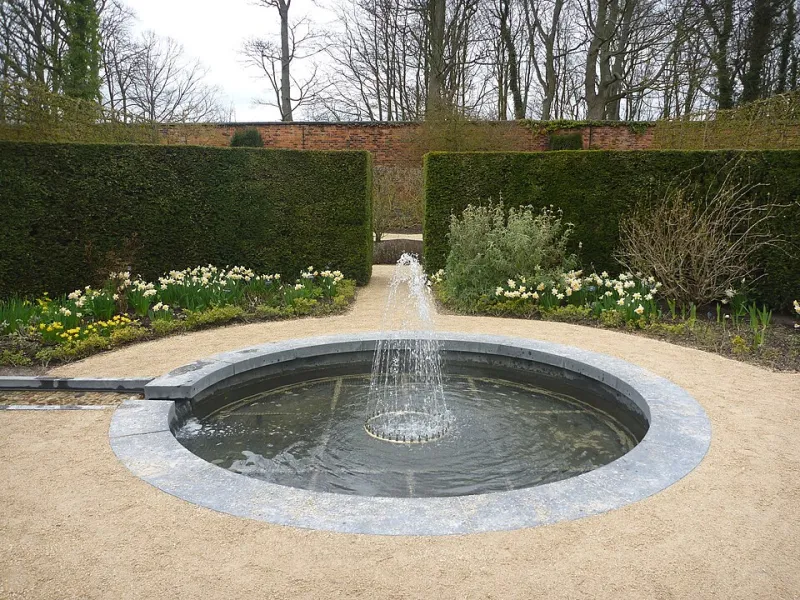
Photo: Richard West , CC BY-SA 2.0, via Wikimedia Commons
Walk to the back corner of almost any small British garden and you'll find the same scene: a patch of paving nobody sits on, the shed's north wall, and a bit of soil that goes sour every January. It's the corner we quietly abandoned somewhere around the second summer.
Which is odd, because it's usually the most useful square metre you own. It's out of the way of the washing line and the football. It catches the last of the evening sun if it faces west. And it's almost always where the water ends up.
The doctrine is simple: build less, plant more, and let gravel do the job that concrete is currently failing at. Here's how to convert a soggy, hard-edged corner into the best bit of the plot in a weekend.
First, admit the corner is a drainage problem
Corners are low points. Not always, but often — ground settles toward the boundaries, the downpipe dumps into one, and a fence line acts as a dam. If your corner holds water for days after rain, no amount of clever planting will fix it. So dig.
Take a spade to it in late autumn, when the water table is doing its worst. Cut a test pit about 30cm square and 30cm deep, fill it with water and time how long it takes to disappear. Gone in an hour? You've got decent structure. Still there next morning? You've got clay, and you need to plan around it rather than fight it.
Do the sausage test too: squeeze a handful of damp soil. If it rolls into a ribbon that hangs without breaking, that's clay. If it crumbles, you're freer than you think.
Where the water should actually go
This is the bit people skip and then regret. Gravel isn't a magic sponge. Permeable surfaces slow water down; they don't make it vanish, and on clay it has to go somewhere sensible.
Get a level out — a cheap 600mm spirit level on a straight edge is fine — and read the existing fall. Aim for roughly 1:60 away from the house and no less than 1:100 toward a soakaway, border or drain. Never push it into a neighbour's garden; that's how you end up in a dispute, and it's also just rude. If your corner is the lowest point of the whole plot, either build a shallow gravel-filled sump you can dig out once a year, or run a length of perforated pipe to a planting bed that can take the flow.
Roughing out the weekend
Friday evening: order your materials — ideally a fortnight earlier. Aggregate sells fast in spring and you don't want to be waiting on a delivery.
Day one — strip, edge, sub-base. Lift any turf, scrape back about 100mm and keep the topsoil for planting pockets. Compact 75mm of MOT Type 1 in two layers with a hand tamper if that's what you've got. Then set your edging.
Day two — membrane, gravel, plants. Woven geotextile over the sub-base (not plastic sheet, and not the thin black stuff that shreds on contact). Then 50mm of aggregate. Then the fun part.
Choosing an aggregate that stays put
Go angular. Ten-millimetre angular gravel — flint, Derbyshire limestone, Cornish grey, whatever your local merchant sells in bulk — knits together underfoot and doesn't migrate into the lawn. Rounded pea shingle rolls about like cat litter and ends up in the house. Cotswold buff looks lovely for one season and then goes green.
For a corner you'll actually walk across, self-binding gravel (hoggin) is worth a look: it firms up to something close to a path surface and still drains. It costs more and wants occasional raking.
How much? Roughly a tonne covers 12 square metres at 50mm, so one bulk bag will do most small corners with a bit spare for topping up. Expect £100–£180 for a bulk bag of decent decorative aggregate in 2026, less for plain angular grit.
Edging is what makes it look intentional
The difference between a gravel corner and a gravel mess is about twenty quid of edging and an hour with a level. Steel lawn edging in one-metre lengths, timber boards set on edge, or a single course of reclaimed bricks all work. Sit the edging on compacted ground, keep the top 25mm proud of the gravel so nothing spills, and check it's level along its length — a wavy edge undoes everything else. If you're butting up to turf, cut a clean vertical trench, not a sloping scuff.
Planting into gravel, on clay, in Britain
This is where the corner earns its keep. Gravel mulches, suppresses weeds, steadies soil moisture and takes the shine off the slugs' favourite hobby. The trick on clay is to plant into raised pockets rather than straight into the pan.
Mix saved topsoil 50/50 with grit and a bit of compost, mound it 5cm above the gravel line, and plant slightly high so the crown isn't sitting in water come February. Then draw gravel right up to the stems.
Good performers for a wet-winter, dry-summer corner: Geranium macrorrhizum (bulletproof, smells of apple), Stachys byzantina for silver, sedum for late nectar, thyme, oregano and lavender on gritty mounds, Verbena bonariensis for height without bulk, and grasses such as Sesleria caerulea or Deschampsia cespitosa, which shrugs off drought and winter wet alike. Add a few bulbs — alliums and camassia — and the corner starts working in April as well as August.
Plant in autumn if you can. If you're building in June, get things in and water weekly until September, then leave them to it.
The maintenance nobody warns you about
Leaves. Rake them off in November or you'll be growing moss, not lavender. Every couple of years, top up with a fresh 10mm and pull anything that's seeded in. Don't let soil mix into the gravel — that's how the whole thing quietly turns into a weed bed with good drainage.
Then put a chair on it. That's the whole point.