Over the Fence Counts: Designing a Small Garden With the View You Didn't Plant
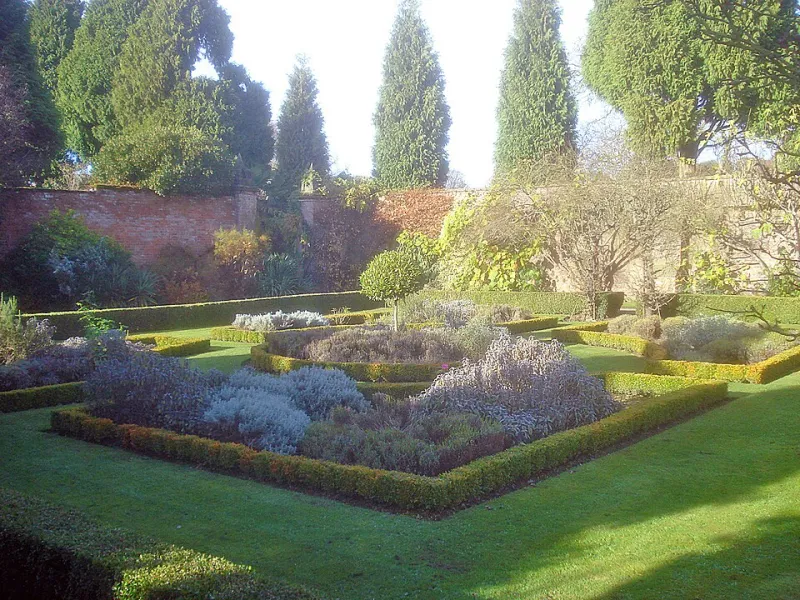
Photo: Trevor Rickard, CC BY-SA 2.0, via Wikimedia Commons
Small gardens rarely feel small because of the square metres. They feel small because the eye hits a fence panel about two metres away and stops there. Your plot might be tiny on paper, but the view beyond the boundary is doing unpaid design work every single day. A mature tree over the back wall, a run of Victorian chimneys, a church spire poking above the rooftops, even a decent bit of sky: none of it belongs to you, and all of it can make your garden feel calmer, deeper and more deliberately placed.
The trick is to treat that outside scenery as part of the plan rather than something you put up with. You do not need permission, a digger or a big budget. You need a chair, a phone camera and a bit of honesty about what you are actually looking at.
Start at sitting height, not standing height
Most garden designs are imagined from the back door, standing up, looking down at the patio. That is not how you use a garden. You sit in it. So take a chair to the spot where you actually drink tea, eat lunch or slump after work, and sit down. Your eye level is now roughly 1.1 metres above the ground. The view has changed completely.
From sitting height, a low fence might reveal a neighbour's tree canopy. A bin store that looked hidden from the kitchen window might sit right in your line of sight. A distant roofline might appear between two shrubs. This is the view that matters.
Do this at three times of day if you can: morning, mid-afternoon and early evening. Light changes what is worth framing. A tree that is flat and grey at noon can turn into a silhouette worth designing around at dusk. Take photos from the chair, not from the doorway. A phone panorama is genuinely useful here, even if it makes your legs look strange.
Make two lists: keep and cover
You are looking for two things. The first is anything worth keeping in the frame: a tree with a decent shape, a chimney, a spire, a line of rooftops, a slice of hill, open sky above the fence. The second is anything your eye keeps snagging on: wheelie bins, a satellite dish, a blank extension wall, a neighbour's window, a tangle of old fencing, a shed that has seen better days.
Be realistic. You will not screen everything, and you should not try. A small garden filled with screening is just a smaller garden with less light. Pick one good view to frame and one bad view to soften. That is a weekend's work, not a life's work.
Frame the good bits with one vertical and one horizontal
A borrowed view works best when it looks intentional. You are not trying to copy the whole landscape; you are making a window onto it. In practice, that usually means one upright element and one horizontal element placed so they guide the eye.
The upright might be a multi-stem tree in a pot, a slim obelisk with a climber, a narrow arch, or even a tall planter with something grassy in it. The horizontal might be a low bench, a gravel edge, a run of low planting or the top line of a fence. Put them together so the eye travels up the upright, across the horizontal, and out into the borrowed view.
A gap in planting is more powerful than a solid wall of shrubs. If you can see a neighbour's oak through a loose screen of hazel or a gap between two pots, it reads as part of your garden. If you block the view entirely, you have simply built a bigger fence.
Soften the bad bits without building a fortress
Screening is where small gardens go wrong. People buy the tallest, densest thing available and plant it on the boundary, then wonder why the garden feels dark and airy-fairy no more. The aim is to interrupt the view, not erase it.
A slatted panel fixed to your own fence can filter an ugly wall without blocking light. A trellis with a climber does the same job more slowly and more prettily. Honeysuckle, jasmine, ivy and climbing roses all earn their keep, though ivy needs watching and jasmine is happier in a sheltered spot. If you are fixing anything to a fence, make sure it is your fence, and check the height rules where you live. In many cases a fence over two metres needs permission, and trellis on top can count towards that height. Conservation areas and deeds can add their own rules, so a quick check with the local council is cheaper than an enforcement letter.
If you need something taller, a slim pleached tree in a pot or a bamboo with a root barrier will do more for you than a run of leylandii. Keep the bottom of any screen open if you can. A floating panel or a raised planter with clear space beneath it feels lighter than a solid wall and still breaks up the view.
Let the sky do some of the work
In small UK gardens, sky is the most underused borrowed view. We tend to fill the back of the plot with tall plants and then wonder why the garden feels closed in. If you keep the boundary planting low and horizontal, the sky above the fence becomes part of the composition. That is especially useful in winter, when the structure of a neighbour's tree and a plain grey sky can look better than any summer border.
Rooflines, chimneys and spires are vertical accents you did not have to pay for. You can echo them with a tall, narrow pot or a single upright shrub, or you can simply align a path or a seat so they sit in the middle of the view. A little repetition makes a borrowed view feel deliberate rather than accidental.
Borrowed views are not guaranteed
Here is the sensible caveat. The tree over the fence belongs to someone else. It can be pruned, felled or replaced with a shed. A neighbour can put up an extension. The view you design around today may not be there in five years.
So use the borrowed view as a bonus, not a load-bearing wall. Give your garden enough of its own structure, in pots, fences, paths and evergreen planting, that it still works if the view changes. If a neighbouring tree is doing a lot of the heavy lifting, have a friendly word about its future before you plan a border around it. It is also worth knowing whether the tree is protected by a Tree Preservation Order or sits in a conservation area, though that is a question for the council rather than a chat over the fence.
A simple weekend plan
Sit in your main seating spot with a cup of tea and take three photos: morning, afternoon and evening. Mark one view you want to keep and one you want to soften. Move your chair a metre to see if the view improves. Buy one climber or one upright pot, not a vanload of screening. Fix a slatted panel or plant a trellis climber on your own boundary. Then sit down again and check whether the garden feels a bit more connected to the world outside it.
That is the whole trick. You are not trying to own the view. You are just letting it in.